
Beyond the Ball: Best Brain Games and Cognitive Enrichment for Border Collies

Beyond the Ball: Best Brain Games and Cognitive Enrichment for Border Collies

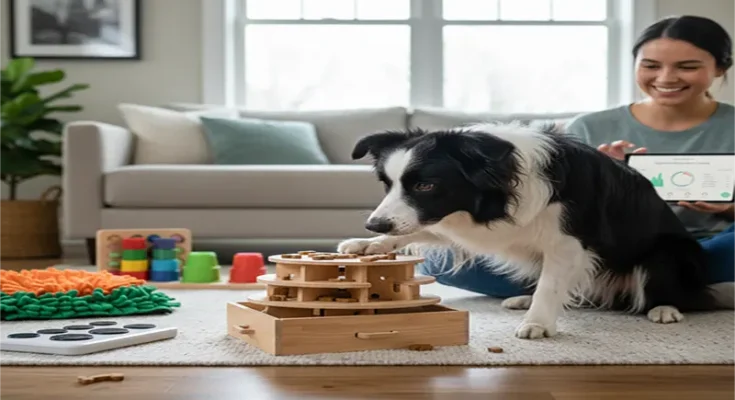
Border Collies are remarkably intelligent, highly driven animals that thrive when their minds are as active as their bodies. Because they were bred for the complex, high-stakes work of herding, they often struggle in modern settings where that “work” isn’t clearly defined. Without constructive outlets, this intellectual energy frequently manifests as boredom, anxiety, or the development of compulsive habits like car-chasing or nipping.

To keep a Border Collie mentally fulfilled, the goal is to shift your focus from physical exhaustion to cognitive fatigue.

The Border Collie Mind: A Double-Edged Sword

It is a common misconception that a “tired” dog is just a dog that has run a few miles. For a Border Collie, physical exercise is merely a warm-up. If you provide them with hours of fetch, they often just develop more stamina, resulting in a dog that is physically fit but still mentally restless. Providing meaningful “jobs” that challenge their problem-solving and focus is essential to preventing behavioral sinks—environments where a dog’s stress leads to repetitive, non-productive behaviors.

Harnessing Herding Instincts

You cannot remove the herding instinct, but you can redirect it into safe, constructive outlets.

  • Boundary Games: Teach your dog to “settle” or “place” within a specific
Beyond the Ball: Best Brain Games and Cognitive Enrichment for Border Collies Read More
The Digital Pack: Using Multi-Pet AI Tracking Apps to Manage Shared Health and Activity Goals

The Digital Pack: Using Multi-Pet AI Tracking Apps to Manage Shared Health and Activity Goals

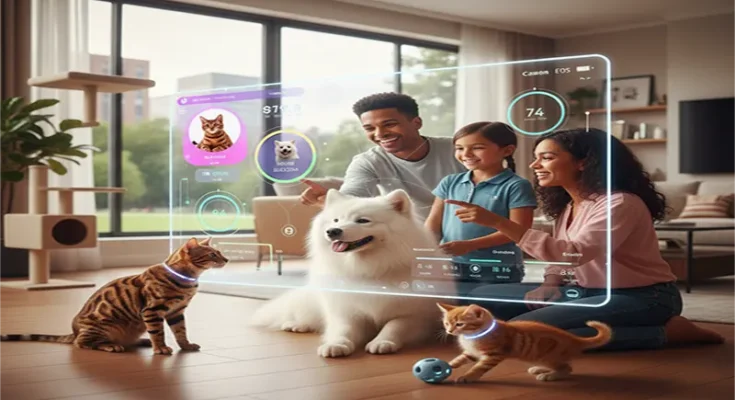
For households with multiple pets, the logistics of care can quickly become a full-time job. From juggling vaccination schedules for three different dogs to monitoring the subtle health shifts in an aging cat, manual tracking often leads to fragmented information and missed opportunities for early intervention. The rise of AI-integrated pet health ecosystems is fundamentally changing this dynamic, transforming the “multi-pet household” from a chaotic juggling act into a synchronized, data-driven operation.

The Evolution of the ‘Smart’ Household

Historically, pet management relied on a mixture of mental notes, paper calendars, and memory—a system prone to human error, especially in busy households. The modern era of pet care has shifted toward centralized AI dashboards. These platforms do more than just store files; they act as a “digital pack leader,” consolidating disparate streams of data into a single, cohesive view. By integrating wearable sensors, smart home cameras, and user-provided health logs, these AI systems create a comprehensive digital twin for every pet in your home.

Key Features of Multi-Pet AI Ecosystems

To be effective, a multi-pet AI platform must handle complexity with simplicity. Essential features include:

  • Centralized Profile Management: Every pet gets a dedicated digital identity storing medical histories, vaccination due dates,
The Digital Pack: Using Multi-Pet AI Tracking Apps to Manage Shared Health and Activity Goals Read More
Daily Cognitive Enrichment Activities and Supplements for Senior Dogs with CCD

Daily Cognitive Enrichment Activities and Supplements for Senior Dogs with CCD

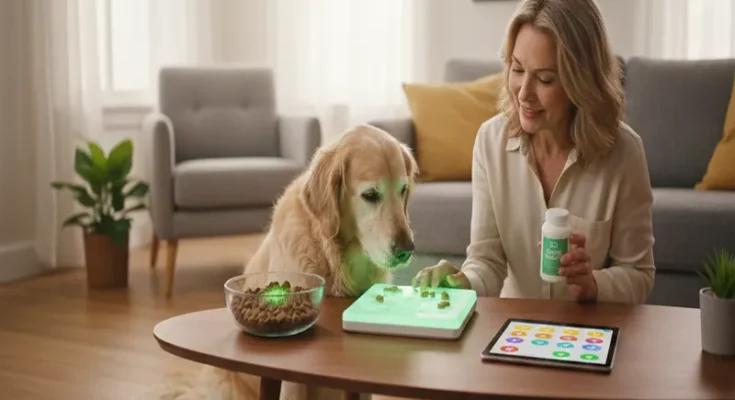
Caring for a senior dog facing Canine Cognitive Dysfunction (CCD)—often described as “doggy dementia”—requires a shift in perspective. CCD is a progressive neurological condition characterized by the accumulation of beta-amyloid proteins, reduced blood flow, and neuronal damage, which impairs memory, learning, and environmental awareness. While there is no cure, a multimodal approach combining enrichment, nutrition, and environmental management can significantly slow progression and improve your companion’s quality of life.

The Role of Environmental Enrichment: Use It or Lose It

The aging brain benefits immensely from engagement. Consistent, low-stress mental stimulation helps maintain synaptic plasticity.

  • Scent Work: This is perhaps the most powerful tool for a dog with CCD. Since scent is often the last sense to decline, “sniffaris”—walks where the dog leads the pace and chooses where to sniff—are invaluable. You can also hide high-value treats around the home for simple, low-frustration scavenger hunts.
  • Tactile Puzzle Boards: Use puzzle feeders or boards that require nudging or pawing. The goal is engagement, not extreme challenge; ensure the task is easily solvable to prevent frustration.
  • Target Training: Teaching simple, low-impact behaviors (like “touching” a hand with their nose) keeps the mind active. Use positive reinforcement and keep sessions very short—5 minutes is
Daily Cognitive Enrichment Activities and Supplements for Senior Dogs with CCD Read More
Best Furniture and Vertical Space Solutions for a Harmonious Multi-Pet Household

Best Furniture and Vertical Space Solutions for a Harmonious Multi-Pet Household

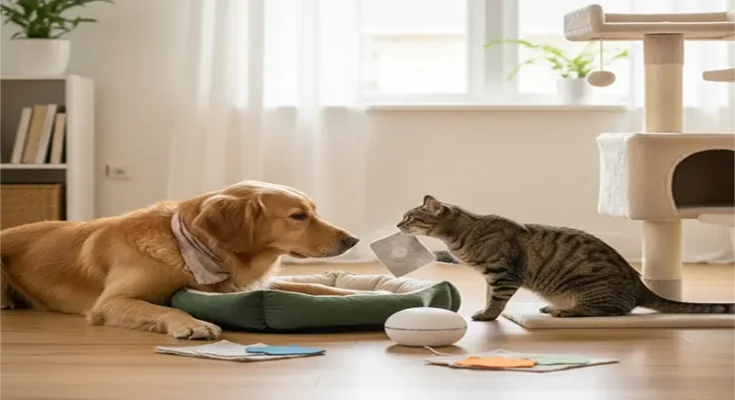
In a multi-pet household, the home is more than just a living space—it is a complex ecosystem. When multiple species share the same square footage, stress often arises not from personality clashes, but from a struggle for territory and resources. To foster true harmony, we must rethink our interiors through the lens of animal behavior and environmental design.

The Science of Territory

At the heart of pet conflict lies the Resource Dispersion Theory. This ecological concept suggests that the way essential resources—food, water, resting spots, and safe zones—are distributed dictates how animals share space. In our homes, if all resources are clustered in one area, dominant pets can easily monopolize them, causing “resource guarding” and anxiety in others.

To mitigate this, we must disperse resources. By strategically placing multiple stations throughout the home, we reduce the need for pets to compete. Furthermore, we must address the “vertical territory.” While dogs are largely terrestrial, cats are arboreal; they experience their environment in three dimensions. Providing height is not a luxury—it is a physiological necessity that allows cats to monitor their domain from a position of safety, effectively diffusing potential conflicts with canine or feline housemates.

Vertical Engineering for Cats

A …

Best Furniture and Vertical Space Solutions for a Harmonious Multi-Pet Household Read More
Transitioning to Zero-Waste Pet Care: Sustainable Playtime and Organic Grooming

Transitioning to Zero-Waste Pet Care: Sustainable Playtime and Organic Grooming

As pet owners, we often focus on the well-being of our furry companions, but rarely stop to consider the ecological “pawprint” our daily habits leave behind. From the plastic toys scattered across the living room to the synthetic shampoos we use during bath time, the conventional pet care industry is a significant contributor to landfill waste and chemical pollution. Transitioning to a zero-waste lifestyle for your pet isn’t about achieving perfection overnight; it is about making intentional, sustainable swaps that benefit both your companion’s health and the planet.

The Environmental ‘Pawprint’

Conventional pet products frequently rely on petroleum-based plastics and synthetic chemicals. Plastic toys are rarely recyclable and often degrade into microplastics, which infiltrate ecosystems and can be ingested by wildlife. Similarly, many commercial grooming products contain sulfates, parabens, and artificial fragrances. When rinsed away, these chemicals enter our waterways, disrupting aquatic life and potentially causing skin irritation or allergic reactions in sensitive pets.

The Philosophy of Mindful Pet Ownership

The transition to zero-waste pet care is rooted in a “circular” philosophy: prioritize durability, reuse what you already own, and choose consumables that return to the earth without a trace. It is about shifting from a culture of disposable convenience …

Transitioning to Zero-Waste Pet Care: Sustainable Playtime and Organic Grooming Read More