
The Living Fossil of the Shallows: Unique Features of the Blackchin Guitarfish and Where to Find Them

The Living Fossil of the Shallows: Unique Features of the Blackchin Guitarfish and Where to Find Them

In the murky transition zones where the ocean meets the land—the sandy estuaries, shallow bays, and quiet seagrass meadows of the Eastern Atlantic—lurks a creature that feels like a relic from another geological era. The blackchin guitarfish (Glaucostegus cemiculus) is a master of disguise, a creature whose evolutionary design blurs the lines between two of the ocean’s most iconic groups: sharks and rays. Often overlooked in favor of more charismatic megafauna, this “living fossil” offers a masterclass in adaptation, survival, and the hidden wonders of our coastal seas.

Anatomy of an Evolutionary Hybrid

The blackchin guitarfish is classified within the order Rhinopristiformes, a group of batoid fishes that are frequently referred to as “shovelnose rays.” To the untrained eye, they are a biological contradiction. Their posterior half looks distinctly shark-like, featuring a powerful tail and prominent dorsal fins, while their anterior half is flattened into a disc-like shape reminiscent of a ray.

Their most distinctive feature—and the source of their common name—is the dark, charcoal-colored blotch located on the ventral (underside) surface of their snout. Unlike the more uniform coloration of other guitarfish species, this “black chin” provides a reliable diagnostic marker for researchers and divers alike. Their …

The Living Fossil of the Shallows: Unique Features of the Blackchin Guitarfish and Where to Find Them Read More

The Ghost of the Canopy: Spotting the Elusive Clouded Leopard in Southeast Asia

The Ghost of the Canopy: Spotting the Elusive Clouded Leopard in Southeast Asia

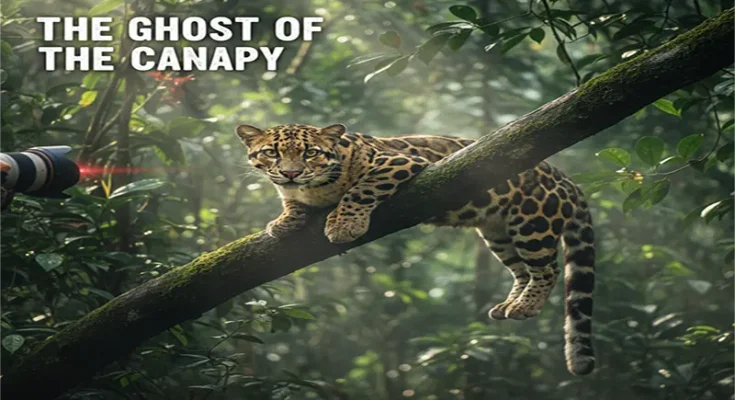
Deep within the emerald cathedrals of Southeast Asia’s rainforests, there moves a shadow so perfectly adapted to its environment that it has earned the moniker “Ghost of the Canopy.” The clouded leopard (Neofelis nebulosa and Neofelis diardi) is one of nature’s most magnificent and enigmatic predators. Unlike the tiger or the lion, which command the forest floor, the clouded leopard is an arboreal acrobat, a master of stealth whose very existence is a testament to the mysteries still held by the world’s shrinking wilderness.

The Master of Stealth

The clouded leopard is a marvel of evolutionary engineering. Its name is derived from its striking coat: large, irregular, dark-edged blotches—often called “clouds”—that allow it to blend seamlessly into the dappled light of the forest canopy.

Physically, it is built for the trees. It possesses a tail that can be as long as its body, acting as a counterbalance for high-speed chases along slender branches. Its most remarkable adaptation, however, lies in its ankles. Clouded leopards have flexible ankle joints that can rotate backward, allowing them to descend tree trunks headfirst, a feat few other big cats can replicate. Furthermore, their broad, powerful paws and sharp, curved claws provide the …

The Ghost of the Canopy: Spotting the Elusive Clouded Leopard in Southeast Asia Read More
The Ghost of the Annamites: The Latest Sightings and Desperate Fight to Save the Rare Saola

The Ghost of the Annamites: The Latest Sightings and Desperate Fight to Save the Rare Saola

In 1992, the scientific world was shaken by the discovery of a species that had remained hidden from modern knowledge, tucked away in the mist-shrouded forests of the Annamite Mountains. This was the Saola (Pseudoryx nghetinhensis), a creature so enigmatic and rarely glimpsed that it was quickly dubbed the “Asian Unicorn.” With its dark brown coat, stark white facial markings, and two long, elegant, almost parallel horns—often reaching up to 50 cm—the Saola is a gentle, secretive mammal. Though often compared to antelopes, genetic research reveals it is actually a unique, highly specialized member of the cattle family.

The Elusive Phantom

The Saola’s habitat—a rugged, remote chain of evergreen forests along the border of Laos and Vietnam—is its greatest protection and its deepest secret. Its ability to remain undetected is legendary; despite intense efforts by researchers, there has not been a confirmed, wild sighting of a Saola since 2013. This prolonged “data void” has left conservationists scrambling to determine if any populations remain. Scientists currently estimate that the population is critically endangered, with some projections suggesting as few as 20 to 100 individuals may still survive in the wild.

The “Wall of Death”: Why the Saola is Disappearing

The Ghost of the Annamites: The Latest Sightings and Desperate Fight to Save the Rare Saola Read More
Why the Iridescent Psychedelic Earth Tiger is the World’s Most Beautiful Rare Spider

Why the Iridescent Psychedelic Earth Tiger is the World’s Most Beautiful Rare Spider

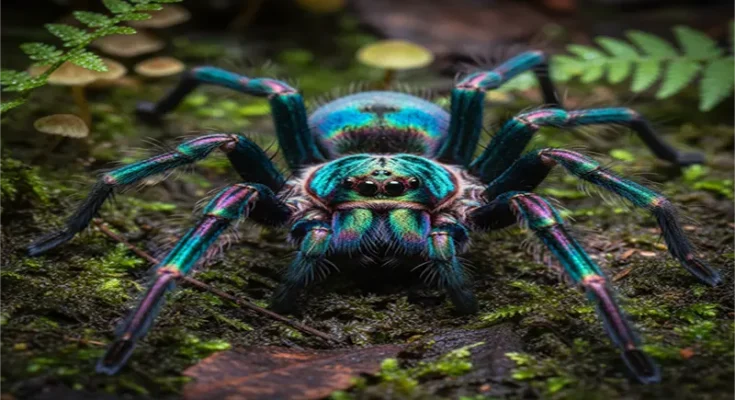
Imagine a creature born from a forgotten dream, its exoskeleton not merely reflecting light but fracturing it into a kaleidoscopic display of electric blues, vivid purples, and emerald greens that shift with every subtle movement. This is no myth, but the Iridescent Psychedelic Earth Tiger (Chilobrachys natanicharum), a tarantula that emerges from the hidden depths of Thailand’s ancient forests to claim its rightful place as one of the natural world’s most breathtaking and elusive arachnids. Its name alone whispers of its exotic allure, a moniker perfectly suited to a spider whose beauty seems almost otherworldly.

The Science of the Shimmer: Nature’s Optical Illusion

What gives the Psychedelic Earth Tiger its mesmerizing, ever-changing palette? The answer lies not in pigments, like the reds of a rose or the browns of soil, but in an intricate feat of biological engineering known as structural coloration. Unlike pigments, which absorb certain wavelengths of light and reflect others, structural coloration relies on microscopic physical structures to scatter, refract, and interfere with light waves.

On the fine setae (hairs) covering this tarantula’s body, scientists have discovered nanostructures—tiny, precisely arranged ridges and layers—that are perfectly spaced to manipulate light. When white light hits these …

Why the Iridescent Psychedelic Earth Tiger is the World’s Most Beautiful Rare Spider Read More
Rat Exterminators Doing Wonders in Your Space

Rat Exterminators Doing Wonders in Your Space

Having a single rat in the trash bin is enough reason to turn the whole house upside down in search of its relatives. Hear a sound of one under your bed; you probably have three more cornered at the edge. The most dangerous rats are the cornered; they chew through metals and wood. Rats can be messy and daring. They suffocate you in your own house with their foul smell. Good news — our Houston rat exterminator services are one call away. It is best that you do not wait; call for expert assistance now.

When should you get a rat exterminator?

As soon as you hear the sound of a rat, it’s time to call for help. Rat extermination services provide you the best ways to get rid of the rats once and for all. Some rats can be wild; they will race all over your house like marathoners; if you see them face to face, act, and seek extermination services. Anytime you suspect of funny dark droppings on the floor, run to your phone and call for help. 

How do rat exterminators work?

Rats exterminators start from the outside; they make sure clean-up is done before moving to …

Rat Exterminators Doing Wonders in Your Space Read More