As pet owners, we often focus on the well-being of our furry companions, but rarely stop to consider the ecological “pawprint” our daily habits leave behind. From the plastic toys scattered across the living room to the synthetic shampoos we use during bath time, the conventional pet care industry is a significant contributor to landfill waste and chemical pollution. Transitioning to a zero-waste lifestyle for your pet isn’t about achieving perfection overnight; it is about making intentional, sustainable swaps that benefit both your companion’s health and the planet.
The Environmental ‘Pawprint’
Conventional pet products frequently rely on petroleum-based plastics and synthetic chemicals. Plastic toys are rarely recyclable and often degrade into microplastics, which infiltrate ecosystems and can be ingested by wildlife. Similarly, many commercial grooming products contain sulfates, parabens, and artificial fragrances. When rinsed away, these chemicals enter our waterways, disrupting aquatic life and potentially causing skin irritation or allergic reactions in sensitive pets.
The Philosophy of Mindful Pet Ownership
The transition to zero-waste pet care is rooted in a “circular” philosophy: prioritize durability, reuse what you already own, and choose consumables that return to the earth without a trace. It is about shifting from a culture of disposable convenience to one of longevity. By choosing items built to last—or repurposing household goods—we reduce the demand for new resource-intensive manufacturing and minimize the volume of waste sent to landfills.
Redefining Playtime with Biodegradable Materials
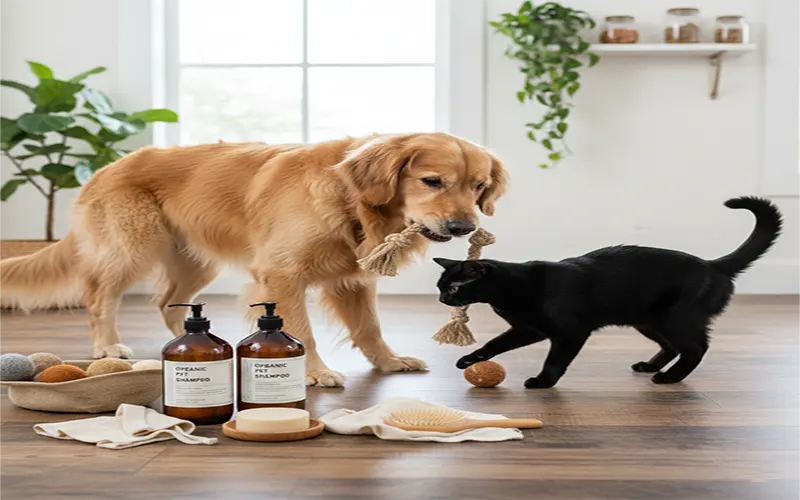
Toys are central to a pet’s enrichment, but they are also a major source of waste. When selecting toys, look for natural, biodegradable materials like hemp, organic cotton, natural rubber, and wool. These materials are not only sustainable but also free from the toxic dyes and endocrine-disrupting chemicals often found in cheap plastic chews.
- Hemp and Organic Cotton: These fibers are incredibly durable and safe for tugging. Unlike synthetic ropes that fray into harmful plastic strands, these natural fibers break down safely.
- Upcycling: Before buying new, look at your own home. An old, clean cotton T-shirt can be braided into a robust tug-of-war toy.
- Natural Rubber: Harvested from the sap of rubber trees, natural rubber toys are resilient, non-toxic, and biodegradable, making them an excellent choice for heavy chewers.
Organic Grooming: Health and Harmony
Switching to organic and natural grooming products is a dual win: it reduces chemical run-off into the environment and protects your pet from unnecessary toxic exposure. Commercial shampoos often strip a pet’s natural skin oils, leading to dryness and irritation. Conversely, products featuring plant-based ingredients like aloe vera, oatmeal, and coconut oil soothe the skin and promote a healthy, shiny coat.
Complement these liquids with sustainable tools. Brushes and combs made from bamboo or sustainably harvested wood are durable, effective, and fully compostable at the end of their long lives.
Small Steps, Big Impact
You don’t need to overhaul your entire routine today. Sustainable pet care is a journey of consistent, small adjustments:
- Bulk Purchasing: If your pet has a favorite dry food, look for local stores that offer bulk refills to avoid single-use plastic bags.
- Waste Management: While composting pet waste requires caution due to pathogens, opting for certified compostable bags (often made from cornstarch) is a significant improvement over standard plastic waste bags.
- Mindful Consumption: Rotate your pet’s existing toys to keep them mentally stimulated without needing to buy new ones. Repair damaged items whenever possible rather than discarding them.
- Support Ethical Brands: Look for companies that prioritize plastic-free packaging and transparent, sustainable sourcing.
By making these mindful choices, you aren’t just caring for your pet; you are actively contributing to a cleaner, healthier future for all living things. Remember, every sustainable swap—no matter how small—is a step toward a more harmonious relationship with our planet.