The Island Cat of the North: Everything You Need to Know About the Rare Kurilian Bobtail Longhair

The Island Cat of the North: Everything You Need to Know About the Rare Kurilian Bobtail Longhair

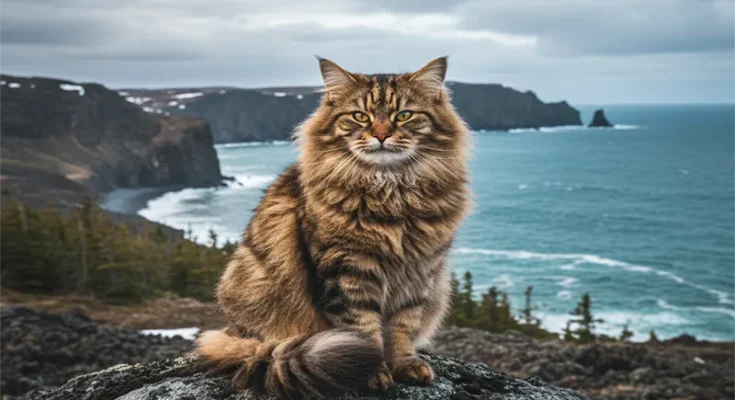
In the remote, windswept reaches of the Kuril Islands—a chain of volcanic outcrops stretching between the Russian Far East and Japan—a cat has thrived in relative isolation for centuries. This is the Kurilian Bobtail, a natural-born adventurer that feels more like a miniature, feline-clad legend than a typical house cat. With a pom-pom tail that acts as a unique fingerprint and a spirit as rugged as the islands from which they hail, the Kurilian Bobtail Longhair is one of the cat world’s best-kept secrets.

A Natural Wonder: Born of the Wild

Unlike many breeds that have been meticulously sculpted by human intervention over generations, the Kurilian Bobtail is a “natural breed.” They were not designed in a laboratory or bred for specific show-ring aesthetics; they evolved through natural selection in a harsh, cold environment. For centuries, they lived alongside humans on the islands, serving as highly skilled rodent hunters and companions. It wasn’t until the mid-20th century, when Russian researchers and military personnel returned to the mainland with these cats, that the world began to realize the Kurilian was a distinct, robust, and extraordinarily resilient breed.

Physical Characteristics: The North’s Masterpiece

The longhaired variety of the Kurilian Bobtail is a …

The Island Cat of the North: Everything You Need to Know About the Rare Kurilian Bobtail Longhair Read More
The Living Fossil of the Shallows: Unique Features of the Blackchin Guitarfish and Where to Find Them

The Living Fossil of the Shallows: Unique Features of the Blackchin Guitarfish and Where to Find Them

In the murky transition zones where the ocean meets the land—the sandy estuaries, shallow bays, and quiet seagrass meadows of the Eastern Atlantic—lurks a creature that feels like a relic from another geological era. The blackchin guitarfish (Glaucostegus cemiculus) is a master of disguise, a creature whose evolutionary design blurs the lines between two of the ocean’s most iconic groups: sharks and rays. Often overlooked in favor of more charismatic megafauna, this “living fossil” offers a masterclass in adaptation, survival, and the hidden wonders of our coastal seas.

Anatomy of an Evolutionary Hybrid

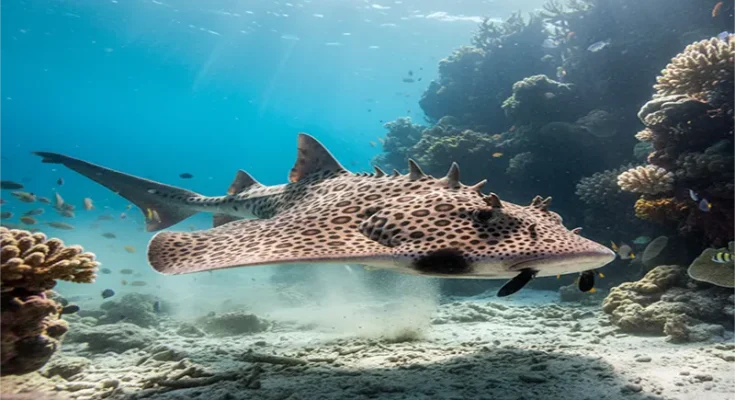
The blackchin guitarfish is classified within the order Rhinopristiformes, a group of batoid fishes that are frequently referred to as “shovelnose rays.” To the untrained eye, they are a biological contradiction. Their posterior half looks distinctly shark-like, featuring a powerful tail and prominent dorsal fins, while their anterior half is flattened into a disc-like shape reminiscent of a ray.

Their most distinctive feature—and the source of their common name—is the dark, charcoal-colored blotch located on the ventral (underside) surface of their snout. Unlike the more uniform coloration of other guitarfish species, this “black chin” provides a reliable diagnostic marker for researchers and divers alike. Their …

The Living Fossil of the Shallows: Unique Features of the Blackchin Guitarfish and Where to Find Them Read More
Beyond the Purr: Managing Maine Coon Heart Health with AI Wearable Tracking and Precision Nutrition

Beyond the Purr: Managing Maine Coon Heart Health with AI Wearable Tracking and Precision Nutrition

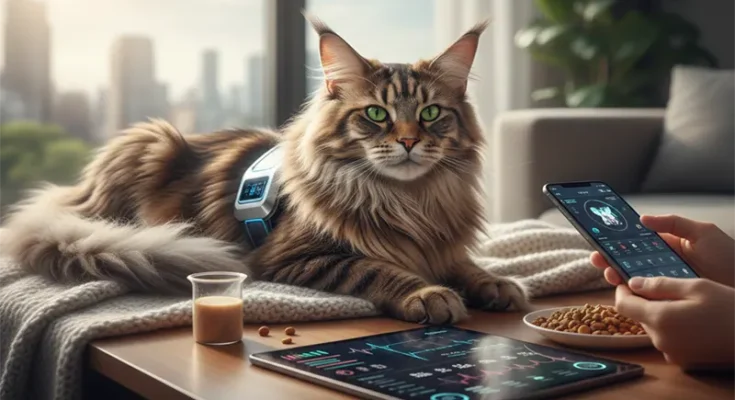
The Maine Coon is a breed of superlatives: the “gentle giant” of the feline world, known for its tufted ears, impressive size, and soulful expression. Yet, beneath that regal, plush exterior lies a breed-specific vulnerability that haunts many devoted owners: Hypertrophic Cardiomyopathy (HCM). As the most common heart disease in cats, HCM is a silent, progressive condition characterized by the thickening of the heart’s muscular walls, which eventually compromises the organ’s ability to pump blood efficiently.

For years, managing HCM was a game of “catch-up.” By the time clinical symptoms like lethargy, labored breathing, or sudden collapse appeared, the disease was often already in an advanced state. Today, however, we are entering a new era of proactive feline healthcare, where the convergence of Artificial Intelligence (AI) and precision nutrition is shifting the paradigm from reactive treatment to preemptive care.

The Maine Coon’s Achilles Heel: HCM

In Maine Coons, HCM often has a hereditary component, with specific genetic mutations—most notably in the MYBPC3 gene—implicated in the development of the disease. Because the heart muscle thickens slowly, the condition is notoriously asymptomatic in its early stages. A Maine Coon may appear perfectly healthy, playing and purring, while its heart is undergoing subtle, …

Beyond the Purr: Managing Maine Coon Heart Health with AI Wearable Tracking and Precision Nutrition Read More
The Ghost of the Canopy: Spotting the Elusive Clouded Leopard in Southeast Asia

The Ghost of the Canopy: Spotting the Elusive Clouded Leopard in Southeast Asia

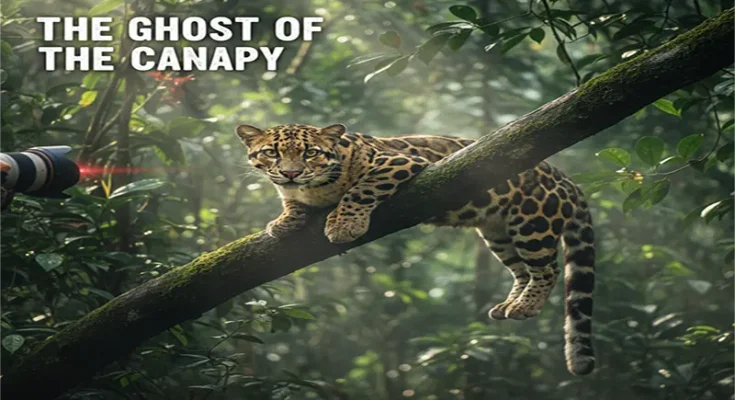
Deep within the emerald cathedrals of Southeast Asia’s rainforests, there moves a shadow so perfectly adapted to its environment that it has earned the moniker “Ghost of the Canopy.” The clouded leopard (Neofelis nebulosa and Neofelis diardi) is one of nature’s most magnificent and enigmatic predators. Unlike the tiger or the lion, which command the forest floor, the clouded leopard is an arboreal acrobat, a master of stealth whose very existence is a testament to the mysteries still held by the world’s shrinking wilderness.

The Master of Stealth

The clouded leopard is a marvel of evolutionary engineering. Its name is derived from its striking coat: large, irregular, dark-edged blotches—often called “clouds”—that allow it to blend seamlessly into the dappled light of the forest canopy.

Physically, it is built for the trees. It possesses a tail that can be as long as its body, acting as a counterbalance for high-speed chases along slender branches. Its most remarkable adaptation, however, lies in its ankles. Clouded leopards have flexible ankle joints that can rotate backward, allowing them to descend tree trunks headfirst, a feat few other big cats can replicate. Furthermore, their broad, powerful paws and sharp, curved claws provide the …

The Ghost of the Canopy: Spotting the Elusive Clouded Leopard in Southeast Asia Read More