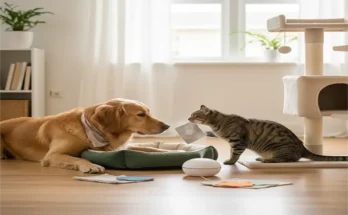
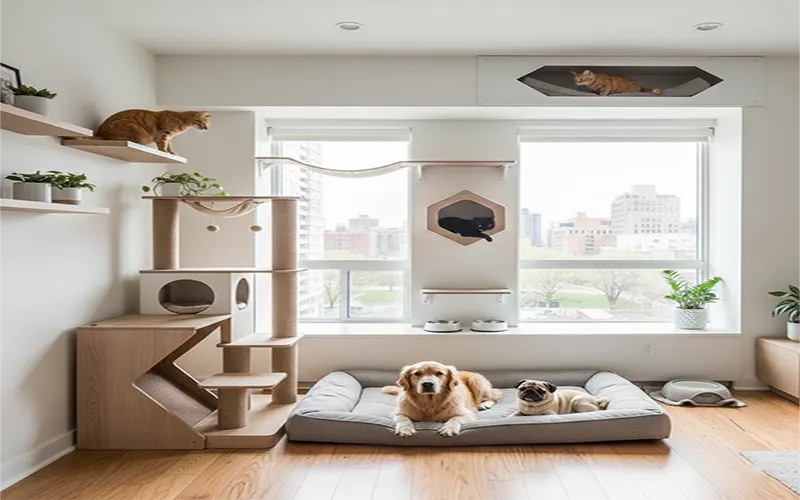
In a multi-pet household, the home is more than just a living space—it is a complex ecosystem. When multiple species share the same square footage, stress often arises not from personality clashes, but from a struggle for territory and resources. To foster true harmony, we must rethink our interiors through the lens of animal behavior and environmental design.
The Science of Territory
At the heart of pet conflict lies the Resource Dispersion Theory. This ecological concept suggests that the way essential resources—food, water, resting spots, and safe zones—are distributed dictates how animals share space. In our homes, if all resources are clustered in one area, dominant pets can easily monopolize them, causing “resource guarding” and anxiety in others.
To mitigate this, we must disperse resources. By strategically placing multiple stations throughout the home, we reduce the need for pets to compete. Furthermore, we must address the “vertical territory.” While dogs are largely terrestrial, cats are arboreal; they experience their environment in three dimensions. Providing height is not a luxury—it is a physiological necessity that allows cats to monitor their domain from a position of safety, effectively diffusing potential conflicts with canine or feline housemates.
Vertical Engineering for Cats
A “cat highway” is the gold standard for feline environmental enrichment. It consists of interconnected wall-mounted steps, shelves, and bridges that allow a cat to traverse a room without ever needing to touch the floor.
- Design for Flow: Avoid “dead ends” which can cause a cat to feel trapped. A well-designed highway should be a circuit with at least two exit points, such as a ramp leading down or a jump-off point to a stable piece of furniture.
- Safety and Grip: Ensure all surfaces have non-slip textures—carpeted inserts, sisal, or high-friction wood finishes are ideal.
- Strategic Heights: The most effective “high-rise” perches are located 5 to 7 feet off the ground. When mounting these, ensure they are secured directly into wall studs to withstand the dynamic forces of a cat jumping or sprinting at full tilt.
Ground-Level Harmony for Dogs
While cats claim the ceiling, dogs thrive on defined ground-level “calm zones.” The goal is to provide a sense of security without obstructing the natural traffic flow of the home.
- Furniture-Integrated Crates: Replace unsightly wire crates with furniture-style enclosures that serve as side tables or console units. This allows the dog to have a den-like space that feels private and secure.
- Elevated Cots: In open-plan living, an elevated dog cot provides a clear boundary for where a dog is expected to settle. Unlike soft beds that can be easily dragged around, cots create a fixed, comfortable “base” that is easy for the dog to recognize as their own territory.
- Traffic Management: Avoid placing these zones in narrow hallways or directly in front of doors. Pets feel most vulnerable when they cannot see who is approaching, so choose corners that allow them to observe the room while remaining out of the primary human “thoroughfare.”
Multi-Species Integration
Managing a shared space often requires “gated” verticality. In a multi-pet home, a baby gate with a small, built-in pet door can be a lifesaver. It allows cats to access a “dog-free” sanctuary—perhaps containing their food, water, and litter box—while preventing larger pets from intruding.
Additionally, look for “cat-accessible storage.” Custom cabinetry with openings high enough for a cat to jump through but low enough to serve as a bookshelf can double as a secure resting spot. This allows pets to share a room while maintaining the distance necessary for a peaceful co-existence.
Materials and Aesthetics: The Final Polish
Functionality shouldn’t require sacrificing your home’s aesthetic. The modern market is full of “pet-centric” materials that bridge the gap:
- Performance Fabrics: Look for upholstery rated for high-traffic, such as performance velvet, microfiber, or tightly woven textiles. These resist scratching, repel fluids, and are surprisingly easy to clean.
- Hard Surfaces: If renovating, prioritize luxury vinyl plank (LVP) or ceramic tiles. They offer the scratch resistance required for claws while providing a stable, non-slip surface for aging joints.
- Design Integration: Instead of “pet decor” that stands out, look for items that match your color palette. Floating cat shelves can be painted to match your wall color, making them look like purposeful design elements rather than pet add-ons.
By thoughtfully engineering our homes, we don’t just “coexist” with our pets; we create a space where every member of the household, regardless of species, can thrive in their own personal domain.