
City Smart, Not Overwhelmed: Impulse Control Exercises for High-Drive Urban Border Collies

City Smart, Not Overwhelmed: Impulse Control Exercises for High-Drive Urban Border Collies

Living with a Border Collie in the heart of a bustling city is a study in contrasts. You have a canine athlete designed to traverse vast, rolling pastures, now tasked with navigating crowded sidewalks, cyclists, and the relentless sensory overload of urban life. Their legendary herding drive—the very trait that makes them brilliant working partners—can manifest as stress, reactivity, or frustration when trapped in an environment that never stops moving.

However, the goal is not to suppress your dog’s nature; it is to provide them with the toolkit to manage their own impulses. Impulse control is the “off-switch” for a brain that is hardwired to track movement. By teaching your Border Collie to pause, choose, and redirect, you turn their intensity into an asset that makes them a calm, focused, and truly exceptional city companion.

Understanding the Drive

A Border Collie’s herding drive is a complex instinct involving fixating, stalking, circling, and nipping. In the city, this translates to “herding” buses, lunging at joggers, or obsessively watching movement. When a high-drive dog lacks a job, they invent one—often becoming the self-appointed traffic control officer of your block.

Physical exercise is vital, but for a Border Collie, it is only half …

City Smart, Not Overwhelmed: Impulse Control Exercises for High-Drive Urban Border Collies Read More

The Ghost of the Annamites: The Latest Sightings and Desperate Fight to Save the Rare Saola

The Ghost of the Annamites: The Latest Sightings and Desperate Fight to Save the Rare Saola

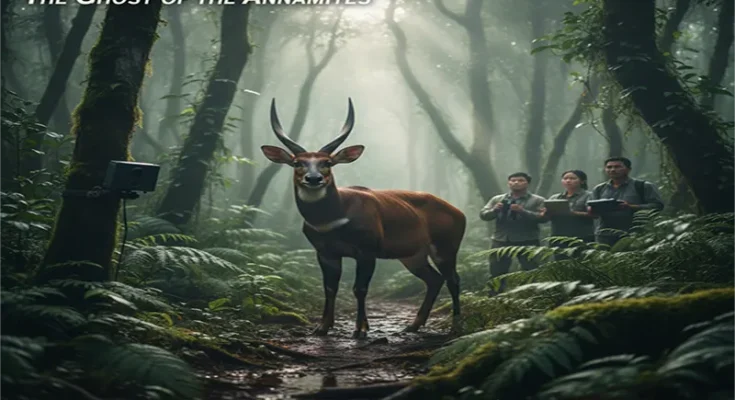
In 1992, the scientific world was shaken by the discovery of a species that had remained hidden from modern knowledge, tucked away in the mist-shrouded forests of the Annamite Mountains. This was the Saola (Pseudoryx nghetinhensis), a creature so enigmatic and rarely glimpsed that it was quickly dubbed the “Asian Unicorn.” With its dark brown coat, stark white facial markings, and two long, elegant, almost parallel horns—often reaching up to 50 cm—the Saola is a gentle, secretive mammal. Though often compared to antelopes, genetic research reveals it is actually a unique, highly specialized member of the cattle family.

The Elusive Phantom

The Saola’s habitat—a rugged, remote chain of evergreen forests along the border of Laos and Vietnam—is its greatest protection and its deepest secret. Its ability to remain undetected is legendary; despite intense efforts by researchers, there has not been a confirmed, wild sighting of a Saola since 2013. This prolonged “data void” has left conservationists scrambling to determine if any populations remain. Scientists currently estimate that the population is critically endangered, with some projections suggesting as few as 20 to 100 individuals may still survive in the wild.

The “Wall of Death”: Why the Saola is Disappearing

The Ghost of the Annamites: The Latest Sightings and Desperate Fight to Save the Rare Saola Read More
Comparing Fel d 1 Protein Levels in Siberian vs. Balinese Cats for Allergy Sufferers

Comparing Fel d 1 Protein Levels in Siberian vs. Balinese Cats for Allergy Sufferers

For the millions of people who love cats but suffer from sneezing, wheezing, and itchy eyes, the dream of feline companionship often feels out of reach. The culprit is not the fur itself, but a microscopic, sticky protein known as Fel d 1. Found in a cat’s saliva, skin oils, and urine, this protein is the primary driver of feline allergies. While no cat is truly “hypoallergenic”—meaning completely free of allergens—certain breeds have gained reputations for being more tolerable to sensitive individuals. Among these, the Siberian and the Balinese are frequently discussed. But does the science back up the hype?

The Biology of the Allergy

To understand why certain cats are labeled as hypoallergenic, we must first understand how Fel d 1 works. This protein is primarily produced in the cat’s salivary, sebaceous (skin), and anal glands. As a cat grooms itself, the protein is transferred to its fur, where it dries into microscopic flakes of dander. These flakes become airborne, easily coating furniture and carpets, where they eventually find their way into the human respiratory system.

It is a common misconception that shorter hair is better for allergies. In reality, hair length has almost no bearing on the …

Comparing Fel d 1 Protein Levels in Siberian vs. Balinese Cats for Allergy Sufferers Read More
Why the Iridescent Psychedelic Earth Tiger is the World’s Most Beautiful Rare Spider

Why the Iridescent Psychedelic Earth Tiger is the World’s Most Beautiful Rare Spider

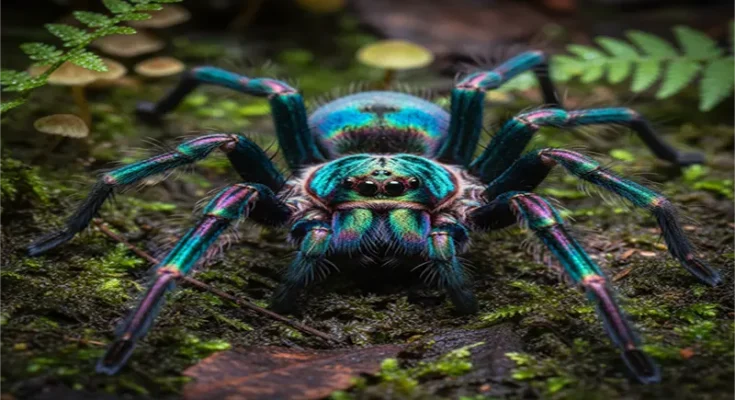
Imagine a creature born from a forgotten dream, its exoskeleton not merely reflecting light but fracturing it into a kaleidoscopic display of electric blues, vivid purples, and emerald greens that shift with every subtle movement. This is no myth, but the Iridescent Psychedelic Earth Tiger (Chilobrachys natanicharum), a tarantula that emerges from the hidden depths of Thailand’s ancient forests to claim its rightful place as one of the natural world’s most breathtaking and elusive arachnids. Its name alone whispers of its exotic allure, a moniker perfectly suited to a spider whose beauty seems almost otherworldly.

The Science of the Shimmer: Nature’s Optical Illusion

What gives the Psychedelic Earth Tiger its mesmerizing, ever-changing palette? The answer lies not in pigments, like the reds of a rose or the browns of soil, but in an intricate feat of biological engineering known as structural coloration. Unlike pigments, which absorb certain wavelengths of light and reflect others, structural coloration relies on microscopic physical structures to scatter, refract, and interfere with light waves.

On the fine setae (hairs) covering this tarantula’s body, scientists have discovered nanostructures—tiny, precisely arranged ridges and layers—that are perfectly spaced to manipulate light. When white light hits these …

Why the Iridescent Psychedelic Earth Tiger is the World’s Most Beautiful Rare Spider Read More