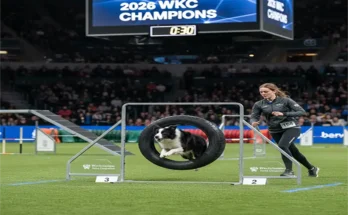

Border Collies are remarkably intelligent, highly driven animals that thrive when their minds are as active as their bodies. Because they were bred for the complex, high-stakes work of herding, they often struggle in modern settings where that “work” isn’t clearly defined. Without constructive outlets, this intellectual energy frequently manifests as boredom, anxiety, or the development of compulsive habits like car-chasing or nipping.
To keep a Border Collie mentally fulfilled, the goal is to shift your focus from physical exhaustion to cognitive fatigue.
The Border Collie Mind: A Double-Edged Sword
It is a common misconception that a “tired” dog is just a dog that has run a few miles. For a Border Collie, physical exercise is merely a warm-up. If you provide them with hours of fetch, they often just develop more stamina, resulting in a dog that is physically fit but still mentally restless. Providing meaningful “jobs” that challenge their problem-solving and focus is essential to preventing behavioral sinks—environments where a dog’s stress leads to repetitive, non-productive behaviors.
Harnessing Herding Instincts
You cannot remove the herding instinct, but you can redirect it into safe, constructive outlets.
- Boundary Games: Teach your dog to “settle” or “place” within a specific area (like a raised bed). This mimics the work of holding livestock and builds vital impulse control.
- “Find It” Games: Utilize their keen sense of smell and focus. Start by hiding toys or high-value treats and giving a “search” command. As they improve, increase the difficulty by hiding items in complex, multi-room patterns.
- Target Training: This is a versatile way to communicate complex directional cues. By teaching your dog to touch a target stick with their nose, you can guide them through intricate sequences, effectively “directing” their movement just as you would with sheep.
Advanced Problem-Solving Puzzles
Standard puzzle feeders are a great start, but Border Collies often master them quickly. To maintain a challenge, you need to elevate the “cognitive load”:
- Multi-Stage Challenges: Create DIY puzzles that require sequential steps. For example, place a treat inside a small, easy-to-open box, and place that box inside a larger, slightly harder-to-open container.
- Concept Training: Teach abstract concepts like “match to sample.” Place two different items in front of the dog and ask them to find another one that matches one of the two.
- Toy Discrimination: Teach your dog the names of their specific toys. Start with one, then add a second, requiring them to “retrieve [specific name]” from a pile. This builds massive focus and vocabulary.
The Art of the “Off-Switch”
Perhaps the most critical skill for a high-drive dog is learning to do absolutely nothing. Many Border Collies have to be taught how to relax.
- Structured Downtime: Implement a routine where you are predictably “boring” at certain times of the day (e.g., when you are working).
- Micro-Sessions: Rather than one long, exhausting training session, perform several 1-to-3-minute “micro-sessions” throughout the day. This keeps the dog engaged without allowing them to reach a state of hyper-arousal.
- Reward Calmness: When you catch your dog settling on their own, calmly drop a treat between their paws. Do not use an excited tone; the goal is to reinforce stillness without spiking their energy.
Integration into Daily Life
The key to preventing boredom is novelty and rotation. Do not leave all their toys out, as they will quickly lose their appeal. Rotate through games, puzzles, and training focuses regularly to keep the dog guessing and engaged. Even a 5-minute session of target training or nose work can be more exhausting for a Border Collie than a 30-minute walk. By weaving these small, meaningful “tasks” into your daily routine, you move from just owning a pet to partnering with a professional athlete who feels truly fulfilled.