Living with a Border Collie in the heart of a bustling city is a study in contrasts. You have a canine athlete designed to traverse vast, rolling pastures, now tasked with navigating crowded sidewalks, cyclists, and the relentless sensory overload of urban life. Their legendary herding drive—the very trait that makes them brilliant working partners—can manifest as stress, reactivity, or frustration when trapped in an environment that never stops moving.
However, the goal is not to suppress your dog’s nature; it is to provide them with the toolkit to manage their own impulses. Impulse control is the “off-switch” for a brain that is hardwired to track movement. By teaching your Border Collie to pause, choose, and redirect, you turn their intensity into an asset that makes them a calm, focused, and truly exceptional city companion.
Understanding the Drive
A Border Collie’s herding drive is a complex instinct involving fixating, stalking, circling, and nipping. In the city, this translates to “herding” buses, lunging at joggers, or obsessively watching movement. When a high-drive dog lacks a job, they invent one—often becoming the self-appointed traffic control officer of your block.
Physical exercise is vital, but for a Border Collie, it is only half the equation. You can run them for miles, but if their brain isn’t engaged, they will return home wired and ready to track the neighbor’s cat. True satisfaction comes from mental labor and the ability to say “no” to their own instincts when asked.
Foundation Exercises: The Urban Toolkit
1. “Wait” and “Stay” on Steroids
Most dogs learn “stay,” but urban life demands a specialized version. We need a “wait” that functions as a safety brake.
- The Crosswalk Rule: Always insist on a “wait” before every street corner. Do not move forward until you have eye contact.
- Duration and Distraction: Start inside where it is quiet. Ask for a stay, take one step away, and return. Gradually increase the distance and add distractions like a ball rolling past. In the city, apply this by asking for a sit-stay while a loud delivery truck passes. The reward for ignoring the “chase” is your permission to proceed.
2. “Leave It” Mastery
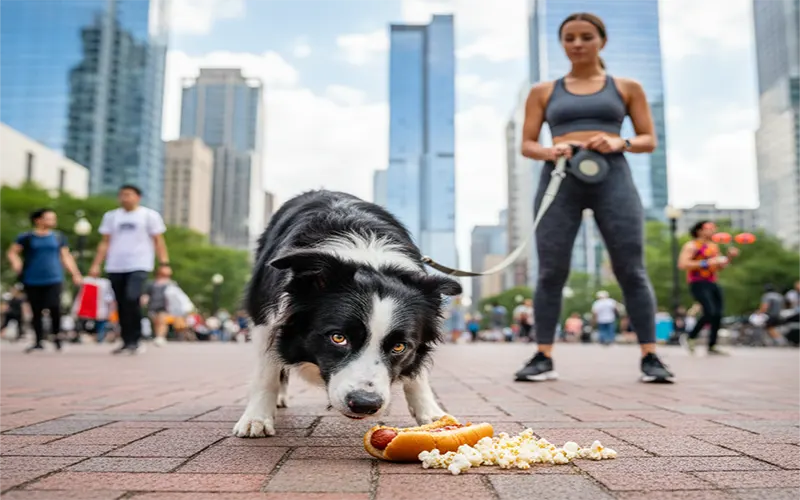
“Leave it” is the most important command for an urban dog, protecting them from dropped food, cigarette butts, or dangerous debris.
- The Progression: Place a low-value treat on the floor and cover it with your hand. Say “leave it.” Wait for your dog to look away from your hand. Mark that moment with a “Yes!” and reward them with a higher-value treat from your other hand.
- Level Up: Once they understand, move to items that move, like a crumpled piece of paper or a toy. Finally, practice on walks when a pigeon takes flight or a bicycle whizzes by.
Channeling the Herding Drive Constructively
1. Flirt Pole Fun
A flirt pole (a toy on a rope attached to a wand) is the ultimate outlet for a Border Collie in a small city park. It mimics the movement of sheep.
- The Game: Use the pole to make the toy dance, but include strict rules. The dog must sit or lie down before you initiate the movement. If they lunge without permission, the game stops. Use the “Out” command to demand they release the toy, teaching them that play is a dialogue you control.
2. Urban “Herding” Games
- “Find It”: Engage their natural prey-tracking skills by playing scent games. Hide high-value treats or a favorite toy in a patch of bushes at the park. This switches their brain from “chase” mode to “search” mode—a far more calming, yet equally intense, mental activity.
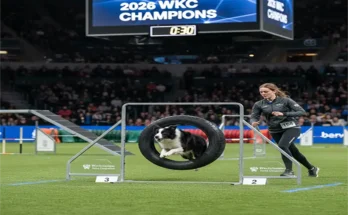
- Object Herding: Use portable plastic cones or even park benches to teach them to navigate around objects on cue. This satisfies their need to move objects and follow directional commands (“Go Out,” “Come By,” “Away to Me”) without the need for actual sheep.
Managing Triggers in the City
The key to leash reactivity—whether it’s cars, bikes, or other dogs—is Counter-Conditioning.
- The Engagement Zone: Find the distance at which your dog notices the trigger but does not react. If they can eat a treat, they are in the zone.
- The Strategy: Every time your dog looks at a “scary” bike, immediately mark it with a “Yes!” and feed them a high-value reward. You are teaching them that a bicycle passing by predicts the arrival of chicken, not the need to lunge. Over time, shorten the distance until they look at the bike and immediately look back at you, waiting for their treat.
Mental Stimulation: The Silent Tire-Out
On rainy days or when your schedule is packed, rely on brain-work:
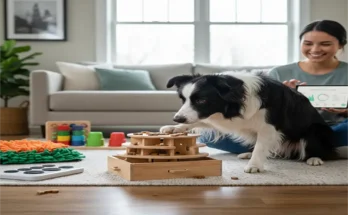
- Puzzle Toys: Never feed a meal in a bowl. Use snuffle mats, frozen Kongs, or complex treat-dispensing puzzles. The effort required to “forage” for food provides deep mental satisfaction.
- Trick Training: Border Collies live to learn. Spend 15 minutes a day teaching complex tricks like “weave through legs,” “back up,” or “spin.” The concentration required to master a new skill is as exhausting as a three-mile run.
Consistency is the Key to Success
Living with a high-drive Border Collie in the city requires a shift in mindset: every walk is a training session, and every interaction is an opportunity for a “check-in.” Be patient with yourself and your dog. There will be days when the city is simply too much, and that is okay. Keep your training sessions short, positive, and consistent. By providing them with clear rules, meaningful work, and outlets for their intensity, you aren’t just managing their drive—you are unlocking the potential of a brilliant mind to navigate the urban jungle with grace and focus.